5 Warning Signs Slouching Is Damaging Your Upper Back
5 Warning Signs Slouching Is Damaging Your Upper Back
Slouching at a desk may seem harmless in the short term, but your body provides distinct warning signals when poor posture starts causing tissue damage. If you are questioning why upper back hurts when slouching, review [the main guide] to explore structural causes. Here are 5 critical signs that slouching is actively compromising your thoracic health.
Sign 1: Persistent Burning Pain Between Scapulae

A burning sensation between your shoulder blades indicates that your rhomboid muscles are overstretched and fatigued from pulling against rounded shoulders all day.
Sign 2: Rounded Shoulders That Do Not Relax

If your shoulders remain pulled forward and rolled inward even when standing or lying down, your chest muscles have tightened structurally, locking you into a slouched profile.
Sign 3: Frequent Tension Headaches at Base of Skull
Forward head posture causes suboccipital muscle compression at the base of your skull. This tension frequently radiates forward, causing persistent tension headaches after long desk sessions.
Sign 4: Restricted Thoracic Mobility
If twisting your upper torso or reaching overhead feels stiff or painful, your thoracic facet joints are suffering from chronic slouching compression.
Sign 5: Shallow Breathing While Seated
Slouching compresses your diaphragm and chest cavity, preventing deep lung expansion. If you find yourself taking shallow breaths at work, posture collapse is affecting your respiratory mechanics.
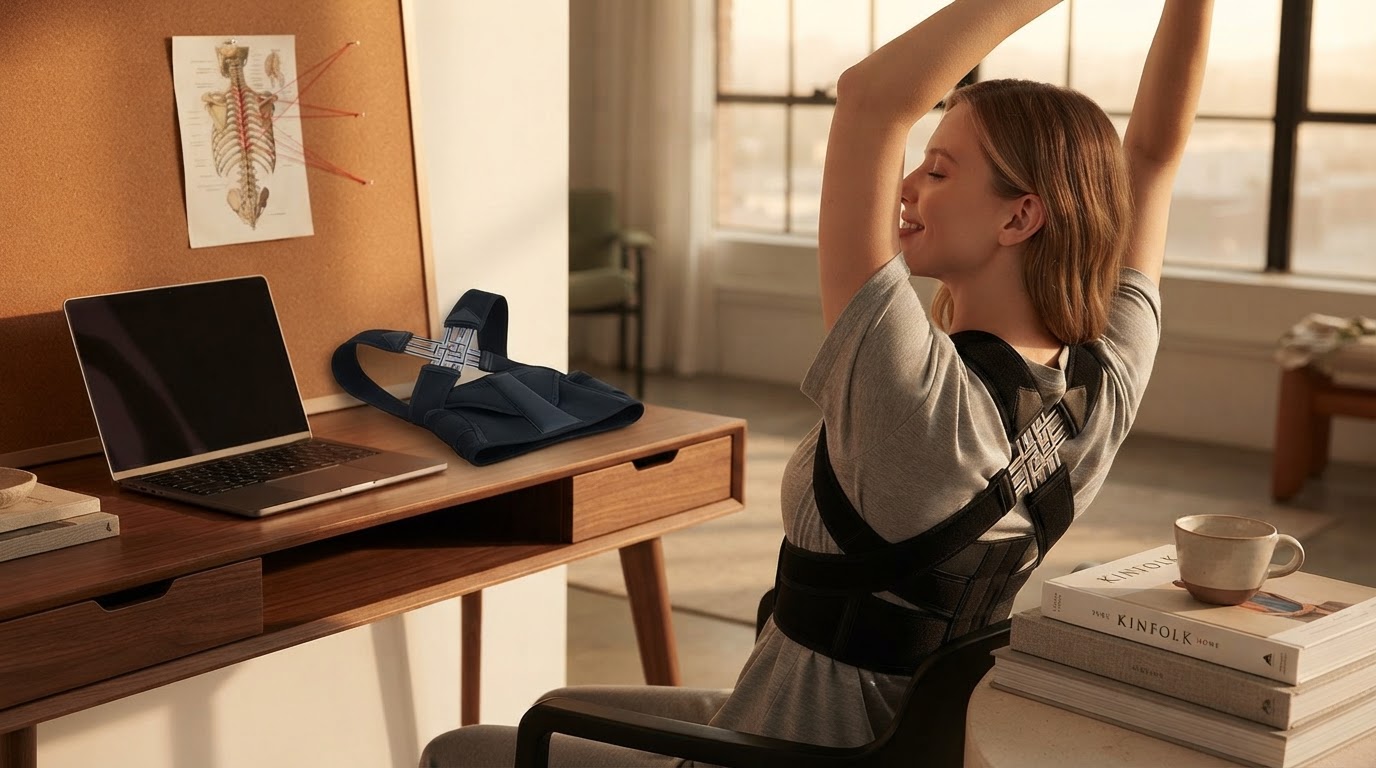
Using ergonomic tools like the Straight Back Brace can help interrupt these patterns before permanent structural changes take hold.
Read the full guide: Why Upper Back Hurts When Slouching: Complete Causes and Relief Guide