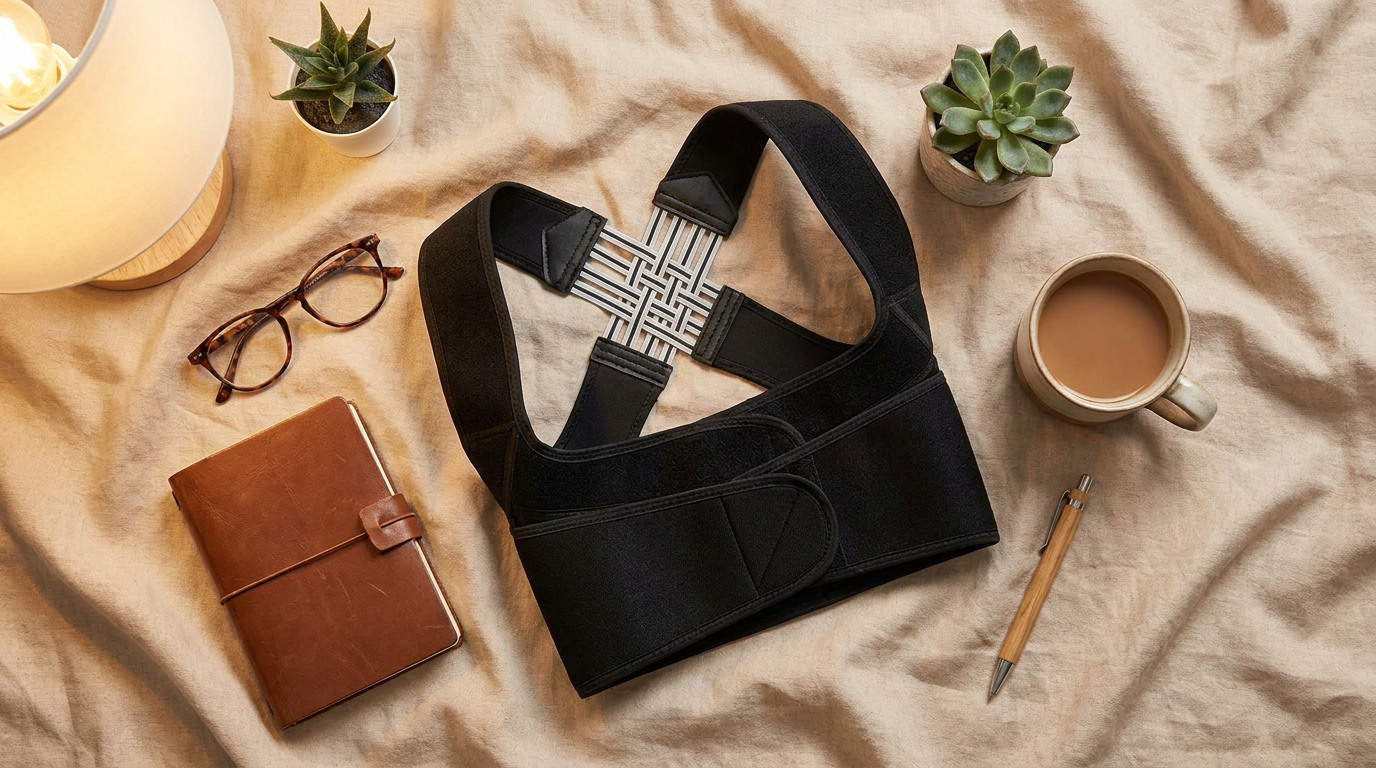
Straight Back Brace and the Clavicle Support Belt Strategy
 Jordan HaleStaff Writer
July 23, 2026. This guide examines the mechanics of stabilization using a clavicle support belt to correct long-term postural habits. It is written for professionals and individuals seeking a structured approach to shoulder and spinal alignment.
I remember the distinct sound of the velcro pulling apart in my quiet home office—a sharp, crisp rip that signaled the end of another day spent hunched over a mechanical keyboard. The first thing I noticed was how heavy my own head felt once the external support was gone. For months, I had been part of the growing demographic of office workers seeking upper back support, searching for something that could counteract the slow creep of "tech neck." According to BraceAbility, the primary function of these devices is often to keep the collarbone area immobilized or stabilized, utilizing a figure-eight design that wraps around both shoulders to encourage natural healing and alignment. While many people confuse them with simple elastic straps, a true clavicle support belt serves as a physical reminder to the musculoskeletal system. It isn't just about pulling the shoulders back; it is about creating a stable environment where the chest muscles can open up and the upper spine can find its neutral home. When you are sitting through a four-hour marathon of video calls, that subtle tactile feedback becomes the difference between a productive afternoon and a evening spent nursing a tension headache. It turns out that the mechanics of the clavicle—the only bony bridge between the upper limb and the axial skeleton—are central to how we carry our entire upper body weight.
The Straight Back Brace is engineered specifically to address these structural needs without the bulk of traditional medical splints. In my own use, I found that the adjustable tension allows for a transition from rigid support to a more flexible adjustable clavicle support strap experience as muscle memory begins to take over. The brace targets the specific "hunchback" curvature that often triggers thousands of searches for corrective wear each month. Unlike generic options, this design focuses on the intersection of the thoracic spine and the scapula. I keep coming back to the way the material feels against a thin undershirt; it is firm enough to provide the resistance needed for scoliosis management or general slouching, yet low-profile enough to disappear under a blazer. This balance is critical for the modern user who needs a posture corrector for men or women that functions in a professional environment. The device utilizes medical insight similar to the Clavicle Posture Support Belt mentioned by ErgonomicLux, which is designed to reduce muscle strain and encourage lasting spinal alignment. Somewhere around week two, the habit of pulling my shoulder blades down and back became less of a conscious effort and more of a resting state. This is where the Straight Back Brace excels—it isn't a crutch that lets your muscles go soft, but a trainer that highlights exactly where your body should be in space.
Choosing the right support requires a framework that accounts for your daily movement patterns and physical requirements. If you are frequently moving heavy objects, you might find that a lifting posture support belt provides the necessary lumbar reinforcement, but for clavicle-specific alignment, the focus must remain on the upper thoracic carriage. When evaluating your options, consider these primary factors:
- Adjustability: Ensure the straps allow for incremental tightening as your posture improves over several weeks.
- Material Breathability: Look for perforated fabrics that prevent heat buildup during extended office hours.
- Tension Distribution: The pressure should be felt across the front of the shoulders and the middle of the back, never pinching the underarms.
- Ease of Application: You should be able to don and doff the brace without assistance to ensure consistent daily use.
- Profile: Check if the hardware—buckles or sliders—is flat enough to remain invisible under standard clothing.
Sources

Photo by Sergey Meshkov on Pexels
- Clavicle vs. Posture Braces: They Look Similar but their Uses are Very Different
- Clavicle Support and Posture Braces
- Clavicle Posture Support Belt