Straight Back Brace Solutions for Upper Back Pain Relief
 Priya RamanSenior Analyst
August 10, 2026. This analysis evaluates the mechanical requirements of an upper back pain relief brace for users experiencing thoracic discomfort. It provides a framework for selecting support systems that address postural fatigue and structural strain in office and active environments.
Think of it as a matrix of support intensity and mobility. The upper back, or thoracic spine, serves as the anchor for the rib cage and the foundation for shoulder movement. When this region experiences pain, it is often due to a breakdown in the relationship between spinal alignment and muscular endurance. According to DonJoy Store, an upper back brace can help improve posture and prevent stooped shoulders, which in turn alleviates the strain caused by poor positioning. The mechanical problem usually stems from 'upper cross syndrome,' where the chest muscles tighten and the upper back muscles weaken, leading to a forward-leaning silhouette. This creates a cycle of chronic tension that requires external stabilization to break. Two axes matter here: the degree of rigid immobilization required and the duration of daily use. For those suffering from acute strain, a clavicle support belt might offer the specific tension needed to retract the shoulders, while more generalized pain often requires a broader surface area of support. The goal of any upper back pain relief brace is not to replace muscle function but to provide a neurological and physical biofeedback loop that encourages the wearer to maintain a neutral spine. Without this external cue, the body naturally defaults to a slouched position, especially during long periods of sedentary work.

Photo by Kindel Media on Pexels
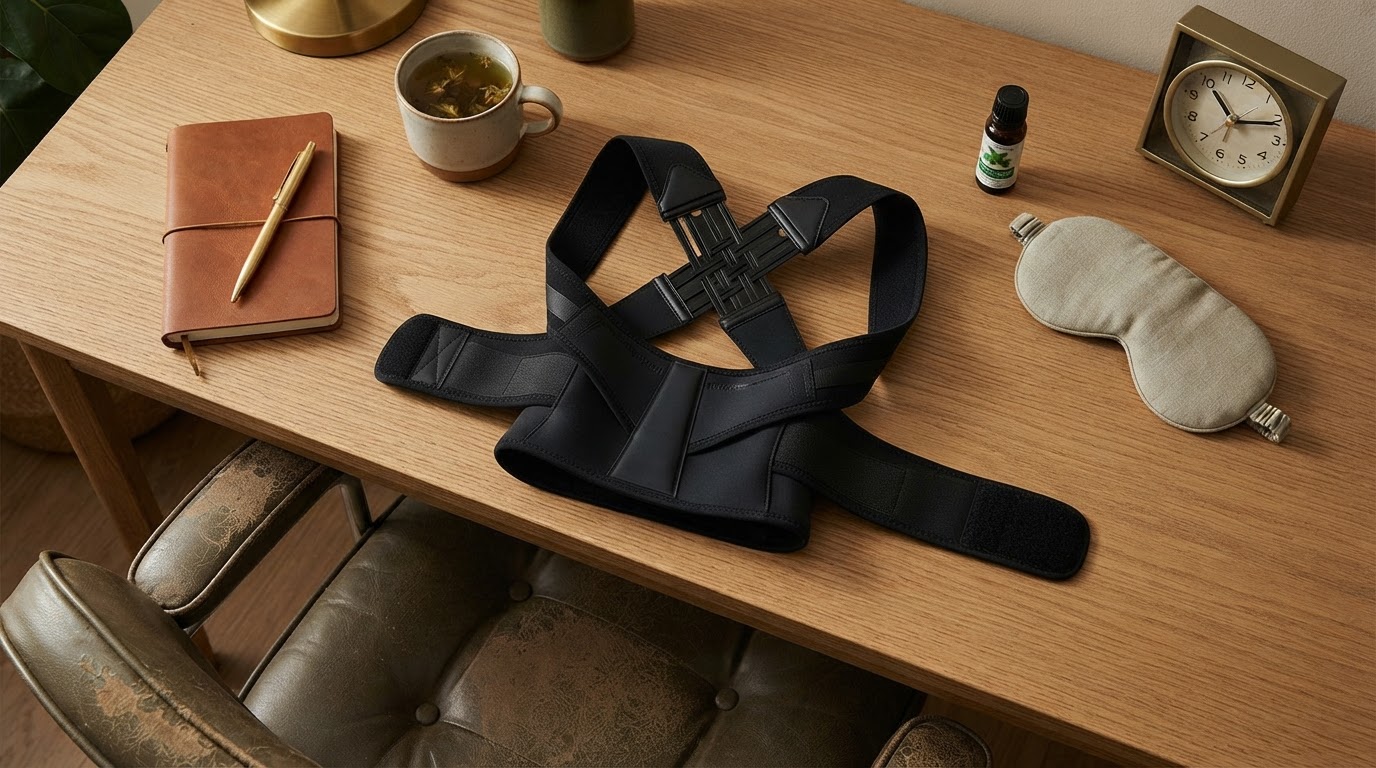
The Straight Back Brace addresses these mechanical failures through a design that emphasizes scapular retraction and thoracic extension. Unlike generic supports that can be overly restrictive, this system focuses on the intersection of the cervical and thoracic spine. It functions by applying gentle posterior pressure to the shoulders while supporting the mid-spine, effectively redistributing the weight of the head and upper torso. This is particularly relevant for users who require thoracic back support for sitting, as the brace prevents the thoracic kyphosis (rounding) that occurs when leaning toward a computer screen. The brace utilizes breathable, medical-grade materials to ensure that the support remains consistent throughout the day without causing skin irritation or overheating. By integrating an adjustable thoracic back brace mechanism, the system allows users to calibrate the level of tension based on their specific pain triggers. This adjustability is critical because the level of support needed during a morning commute may differ significantly from what is required during a high-stress afternoon at a desk. Furthermore, the use of an upper back straightener brace within a comprehensive pain management plan helps to retrain the proprioceptive senses. Once you see it this way, the brace becomes less of a crutch and more of a training tool that facilitates long-term postural health.
The decision rule for selecting a support garment depends on the primary source of the pain: is it structural, muscular, or environmental? For environmental pain caused by poor workstation ergonomics, a light-tension brace is often sufficient to act as a reminder for proper form. However, for those dealing with significant discomfort, Brace Direct suggests that supportive TLSO back braces can effectively alleviate mid to upper back pain by providing more comprehensive stabilization. When evaluating your options, consider the following criteria:
- Adjustability: Ensure the brace features dual-strap systems for independent shoulder and mid-back tensioning.
- Material Breathability: Look for perforated neoprene or moisture-wicking fabrics to allow for all-day wear.
- Profile: Determine if the brace is thin enough to be worn discreetly under professional attire.
- Ease of Application: The user should be able to put on and adjust the brace without external assistance.
- Targeted Compression: The support must focus on the thoracic vertebrae without restricting the diaphragm or breathing.